
Knowing how to protect carpet when decorating and painting is one of the most overlooked parts of any project and one of the most expensive to get wrong. A single knocked-over paint tin, a trail of plaster dust, or a few days of ladders and boots dragging across the floor can undo years of wear on an otherwise pristine carpet. Whether you're a homeowner tackling a DIY refresh or a professional decorator working across multiple client properties, getting carpet protection right from day one saves time, money, and awkward conversations at the end of the job.
This guide walks through exactly what damages carpet during decorating work, the different protection methods available, and how to protect carpet on stairs which is one of the trickiest areas to get right.
What Can Damage Carpet During Decorating?
Before choosing a protection method, it helps to understand what you're actually protecting against. Decorating and renovation work exposes carpet to a wide range of risks, including:
- Paint spills, splashes, and drips - even careful painters knock over tins or flick rollers
- Plaster and plaster dust, which can work its way deep into carpet fibres
- General dust and dirt tracked in from other rooms or outside
- Adhesive and glue from wallpapering or flooring work
- Mud, debris, rubble, and sawdust from building work
- Water, from cleaning up or from wet trades
- Heavy foot traffic from boots, shoes, and repeated trips up and down stairs
- Tools, ladders, and furniture being dragged or set down on the floor
Any one of these can leave permanent staining or wear. Combined, as they often are on a real job, they can turn a newly fitted or existing carpet into a costly problem before the decorating is even finished.
Best Ways to Protect Carpet When Painting
Dust Sheets
Cotton and plastic dust sheets are the traditional choice for decorating work. Cotton dust sheets are absorbent, which means they soak up spills rather than repelling them — paint or water can still seep through to the carpet underneath. Plastic dust sheets offer more resistance to liquid, but they're often thin, tear easily, and can become a slip hazard underfoot, particularly on stairs or in high-traffic areas.
Both types also need constant repositioning as people walk over them, which slows the job down and leaves gaps where mess can get through.
Self-Adhesive Carpet Protection Film
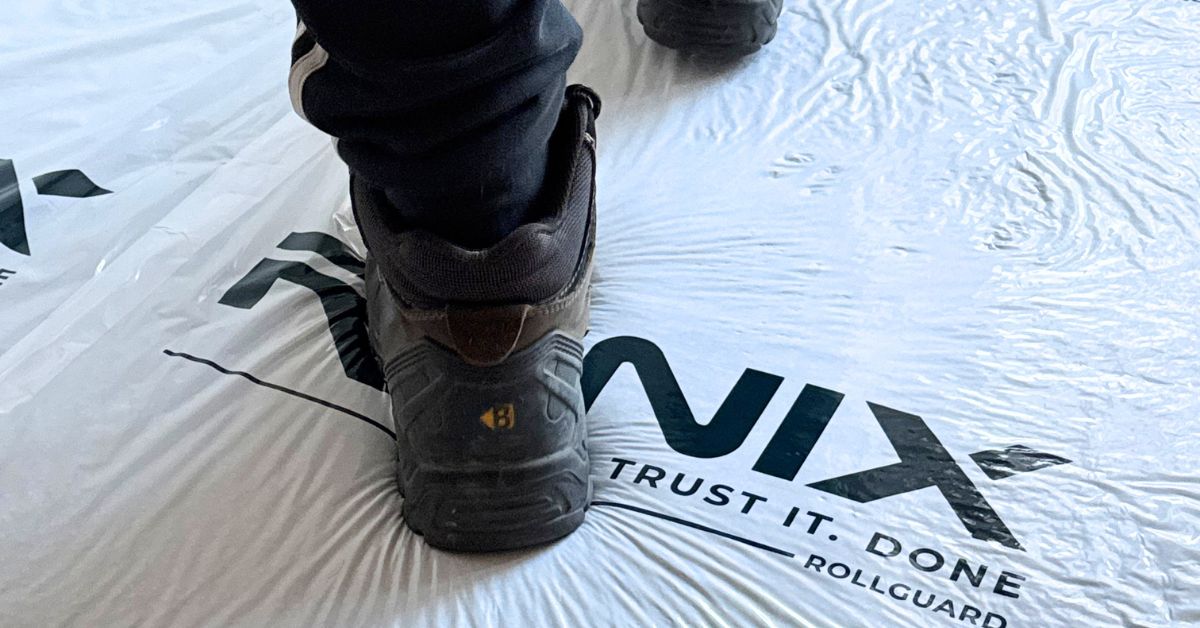
Self-adhesive carpet protection film, like Rynix RollGuard, works differently. Rather than sitting loosely on top of the carpet, it uses a self-adhesive backing that sticks securely to the carpet fibres, creating a continuous protective barrier that doesn't shift, bunch up, or need repositioning throughout the job.
RollGuard's tear-resistant, 70-micron film is designed to withstand ladders, toolboxes, and heavy foot traffic without ripping, while the non-slip backing keeps both the carpet and anyone walking over it secure. It protects against paint spills, plaster, dust, dirt, and general decorating mess, and lifts away cleanly at the end of the job without leaving sticky residue behind, something dust sheets can't offer, since they don't bond to the carpet at all.
For a full breakdown of how the two compare, see our guide on dust sheets vs adhesive carpet protector.
How to Protect Carpeted Stairs When Decorating
Stairs are one of the hardest areas to protect properly. They combine the two biggest risk factors of any decorating job, heavy foot traffic and awkward, uneven surfaces - which makes standard dust sheets particularly unreliable here.
Loose dust sheets on stairs tend to slip, bunch, or ruck up underfoot, which isn't just inconvenient, it's a genuine trip hazard when you're also carrying paint tins, tools, or ladders up and down. Plastic sheeting can be even worse, as it offers little grip on the tread of each step.
To protect carpet on stairs effectively:
- Vacuum the stairs thoroughly before applying any protection, so dust and grit aren't trapped underneath.
- Apply carpet protection film step by step, working from the top or bottom and pressing it firmly into the edges and corners of each tread, where mess and wear tend to concentrate.
- Overlap each section slightly to avoid gaps between treads.
- Choose a product with a non-slip backing, so the protection stays firmly in place even with repeated trips up and down during the job - this matters for safety as much as for the carpet itself.
Because RollGuard's adhesive backing sticks directly to the carpet pile rather than resting loosely on top, it stays put on treads, edges, and corners throughout the project, making it a more reliable option for stair carpet protection than dust sheets or loose plastic sheeting.
How to Apply Self-Adhesive Carpet Protection Film
Applying adhesive carpet protector is straightforward, but a little preparation goes a long way:
- Prepare the area - vacuum the carpet to remove loose dust and dirt before you start.
- Unroll the film across the area you want to protect, adhesive side down.
- Press down firmly as you go, working out any air bubbles and ensuring good contact with the carpet fibres, especially at edges, corners, and thresholds.
- Overlap joins where one section meets another to avoid leaving gaps.
- Leave in place for the full duration of the job — RollGuard is designed for temporary protection and can stay down throughout a multi-day decorating or renovation project.
- Remove by lifting a corner and slowly peeling the film back once the work is complete.
Always check the user application guide before applying, particularly for delicate or newly fitted carpets.
Carpet Protection for Decorators, Builders, and Tradespeople
For trade professionals, carpet protection isn't just about avoiding a stain - it's part of maintaining a professional standard on every job. Property managers, contractors, and painters and decorators working in occupied homes or commercial premises need protection that goes down quickly, survives a full day of foot traffic and equipment, and comes back up without leaving any trace or residue that could raise questions with a client.
This is where professional-grade carpet protection earns its keep. A self adhesive carpet protector that can be relied on across an entire job, from a single room to a whole property, including hallways, landings, and stairs, reduces both the physical risk of damage and the reputational risk of a client unhappy with the state of their home after the work is done.
Protect Your Carpet the Professional Way
Whether you're preparing for a weekend DIY refresh or managing a full renovation across a client's property, the right carpet protection makes the job faster, cleaner, and far less risky. Rynix RollGuard offers professional-grade, self-adhesive carpet protection film that goes down quickly, stays firmly in place on floors and stairs alike, and lifts away cleanly with no residue - trusted by decorators, builders, contractors, and homeowners across the UK.

Leave a comment
This site is protected by hCaptcha and the hCaptcha Privacy Policy and Terms of Service apply.